This vs. a website
The difference between a front door and a building.
If you've ever hired a web developer, you hired someone to build the front door.
The front door matters. It's what new customers see first. It should look good, load fast, and explain what you do clearly. A website contractor does that well.
But a door isn't a building.
The building is what runs your business: how orders get taken and tracked, how customers are followed up with, how inventory moves, how the numbers get reported, how your staff knows what to do next. That's the software system. Most small businesses have a website and a mess of duct tape behind it.
The bakery example
Consider a bakery. The website lets someone place an order for a birthday cake. That's the front door.
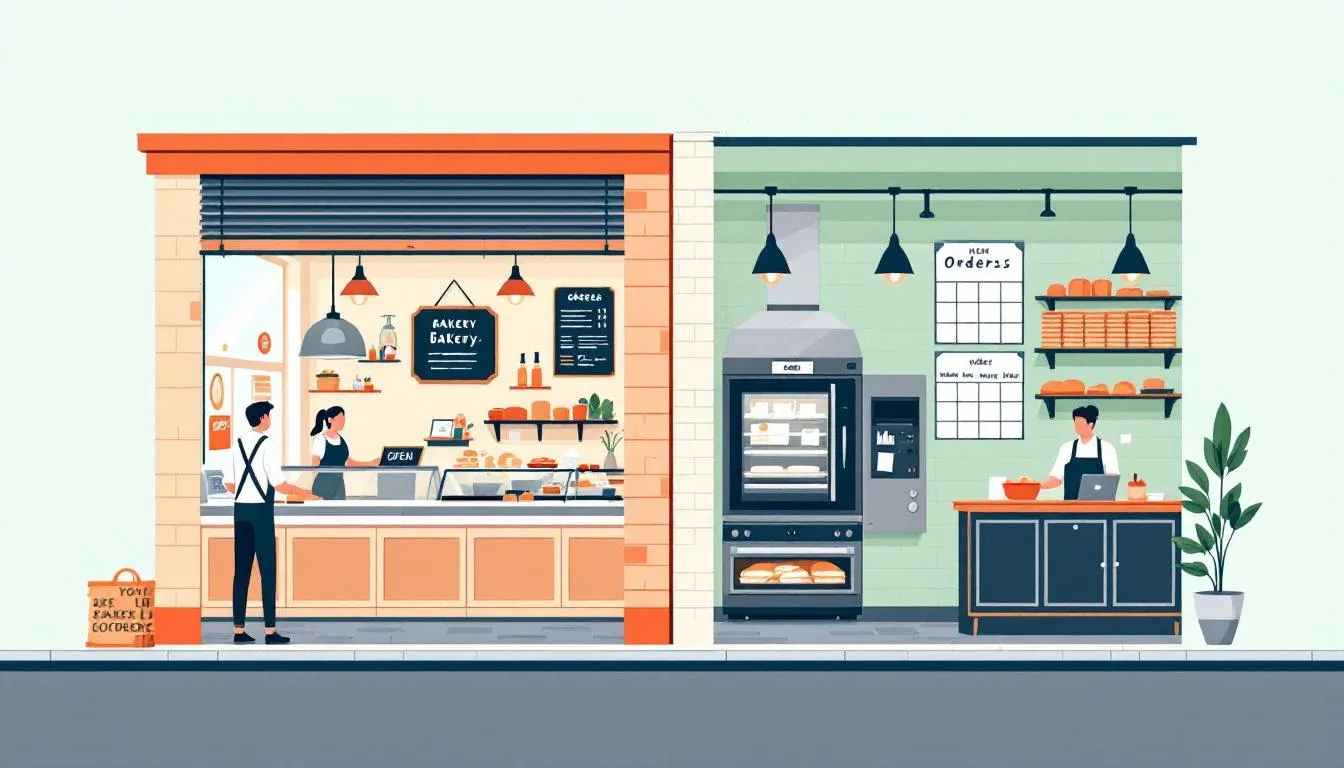
What's behind that front door — what actually runs the bakery — is a different thing entirely:
- An order management system that tracks every order and its current status
- A production schedule that tells the kitchen what to make and when
- A sync to the accounting system so revenue gets recorded without manual entry
- Automated reminder emails when an order is ready for pickup
- A customer database that tracks order history and preferences
- Weekly and monthly reports that tell you how the business is actually doing
A website contractor built the front door. The software system runs the bakery.
Most bakeries are managing those six things on a combination of: a separate scheduling spreadsheet, a separate accounting tool they log into every week, a Gmail inbox where order confirmations get buried, a notebook by the register, and someone's memory. That works until it doesn't.
What most small businesses actually have
[Placeholder — expand with the specific pattern: website + three disconnected SaaS tools + spreadsheets + manual labor. The gap between the front door and the building.]
The pattern is consistent across industries. A business has a website — often a good one. It also has two or three SaaS subscriptions that handle different parts of operations. None of them talk to each other. Someone — usually the owner, or a trusted employee — manually bridges the gaps. Every week.
This works at small scale. It becomes genuinely costly as the business grows. The manual hours compound. The error rate compounds. The context that lives in someone's head becomes a business risk.
What a software system gives you instead
[Placeholder — describe what it looks like when the building is actually built. Specific, concrete, not abstract.]
A software system built for your business looks different from a collection of tools that almost fit. The data model matches how your business actually works. The workflows match how your people actually work. There's one place to look, not four. Reports run themselves. The things that used to require manual action happen automatically.
This doesn't mean ripping out everything you have. Sometimes the right answer is an integration that connects two existing tools that should already talk. Sometimes it's a custom layer built on top of what you have. Sometimes it's replacing a patchwork of SaaS with something built specifically for your operation.
Who this distinction matters for
If your website is working fine and your operations are running smoothly, this conversation isn't for you.
If you have a website and something behind it that costs you hours every week — this is the conversation worth having. Not about rebuilding your website. About building the rest of the building.
The question isn't whether you need a website. You probably already have one. The question is whether the software running your business is as good as the front door.